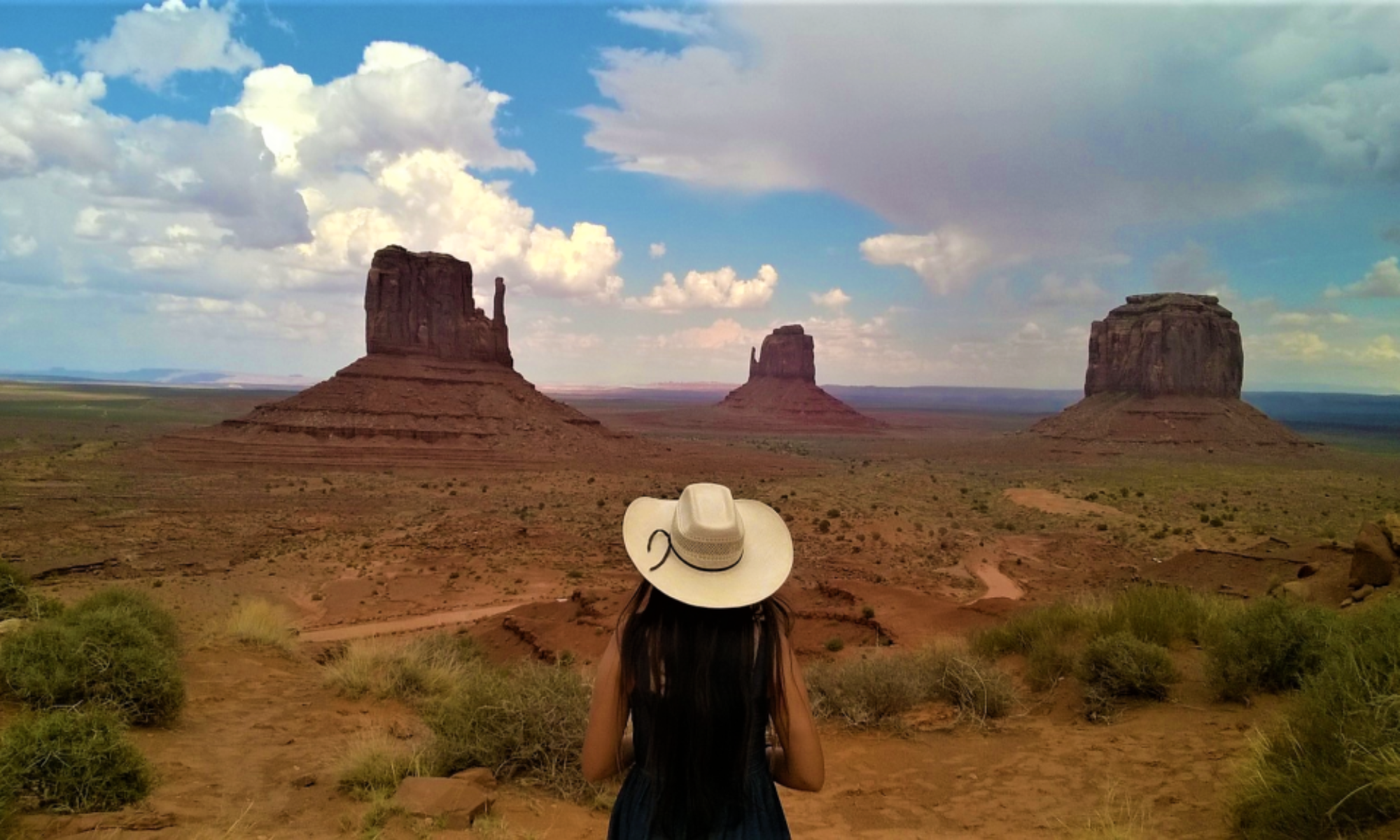
Race Report: Rim Rock Marathon 2019

On Saturday, November 2, I ran Rim Rock Marathon for a second time. 🙂

2019 Rim Rock Marathon outfit. Note the awesome race tech tee in the upper right.

As this race was my first ever marathon last year, I was inspired to run this beautiful course once again. And just like last year, the weather for this race was picture perfect: sunny and blue skies.

About the course: located on Colorado’s Western Slope, Rim Rock Marathon follows up and along 23 mile Rim Rock Drive in Colorado National Monument, just outside Grand Junction and Fruita. The course gains more than 2000 ft. over the first 6 miles, flattens somewhat, then drops 2000+ ft. for the last few miles. Views from the Monument are superb: red rock canyons, the Grand Valley, Grand Mesa, and the Book Cliffs. The race starts just outside the park’s east entrance, by Grand Junction, and concludes at Fruita’s Circle Park.

Course map as marked out on my Garmin Connect app.

Quite obviously, not the easiest course! For an idea of the course and views, watch the video I made of driving Rim Rock, post race day 2018.

Pretty intense, huh? What is also neat about this event is that “[p]roceeds benefit scholarships for Colorado Mesa University Track and Cross Country student-athletes and the Greater Grand Junction Sports Commission,” according to the race website http://rimrockrun.grandjunctionsports.org/. A proud CMU student-athlete alumna myself, I heartily approve of this. 🙂

Training wise, I did not run quite as much as last year, as I focused more on incorporating strength training (going to the gym about 3 times a week). Whenever I did run however, I ran more downhill as to be prepared. Rim Rock is a road race, so I transitioned off trails to street surfaces. The longest distance I ran was 16 miles; in September I ran a total of 70 miles, then tapered down to 43 miles total in October. There is a common misconsception that one must run a 26.2 training race, but not so; with the cumulative effect of training and added adrenaline of race day, save the long run for the actual event.

Looking determined. Selfie the morning of the marathon.

Per tradition, the night before the race I carbo loaded at Enzo’s Italian restaurant: I highly recommend their spaghetti. 🙂 Later that evening, I prepped all my racing apparel and gear. Before sun rise, my friend Jamie drove me to Fruita Community Center for the pre-race meeting; runners were on the buses by 7 AM and transported to the starting line just a mile outside the east entrance of Colorado National Monument.

Hurry up sun! Looking east while waiting for the start.

This time around, the buses remained for about a half hour, so runners didn’t have to wait out the pre-dawn cold—last year we shivered outside for about 45 minutes, waiting for the start. Apparel wise, I took the same approach as last year, wearing a tank top and arm sleeves under my light shell jacket. For bottoms I wore my running shorts under my trusty Mesa State tennis sweats—I like the option of being able to shed layers. I wore the same running vest I’ve used on my other marathons, the pockets filled with GUs, waffles, and gels.

With my time chip secured to my shoes, Mizuno Wave Inspire 15, I joined the racers at the starting line. At 8 o’clock sharp, the race began. Last year, I cruised easily uphill; I’m not being sarcastic when I say I love running uphill. Perhaps to my detriment, I expelled too much energy on the uphill last year, and had too little in the tank for the loooong descent. This time around, I forced myself to go at a slightly slower pace uphill, the idea being I’d reserve energy to blaze downhill the last few miles. Now that I have my Garmin Fenix 5 Plus, for this race I could monitor my pace.

View east, approx. mile 9.

The uphill climb I found once again to be easy, and I kept myself in check so I wouldn’t go too fast. Last year I hit Cold Shivers Point, mile 4.5, in about 45 minutes; this time I arrived 2 minutes later, so I was certainly pacing myself. Once the course topped out around mile 6, I picked up the pace a bit. The sun had since risen, and it was a beautiful, cloudless morning with no wind.

View of Coke Ovens.

My anticipation, and actual participation, in the last year’s Rim Rock was unbridled. I truly was excited to run my first ever marathon on such a beautiful course. Being my first marathon, I felt no pressure. This being my third, I (understandably) wanted to PR…however, I just wasn’t feeling quite the fire on this run. Cardio wise, I could run all day. My Garmin calculated my VO2 max at 51, or superior, which is the top 5% for my age and gender. Mentally, however, I could already feel burnout creeping in: not from this race alone, but running overall. Running is my primary sport, and when you do it so intensely and so consistently, burnout is not only normal, but expected. This was my second marathon in 6 months, so yeah, the training load on my body was a lot this year.

Looking N/NE towards the Book Cliffs and Grand Mesa, approx. mile 10.

Despite feeling that lack of fire, I continued. I had no doubt I would finish and enjoy this race. Getting to run the Monument is an absolute privilege. What other course affords you such magnificent views, where some spots you are literally running along the edge of a 1000 ft. cliff? Driving along Rim Rock Drive never fails to impress, and I’ve driven this road plenty of times before. But getting to experience it entirely on foot? Quite unforgettable.

Despite the mental lag, energy wise I felt great. I made sure to grab water at every aid station, set along every 3 miles or so. I wore my wireless Trekz Afteshokz headphones, which are astounding: they lasted the whole duration of my race. Using bone conduction to transport sound, these headphones sit outside your ear, so you can still hear your surroundings as you exercise. Super lightweight, they do not bounce and provide quality sound. I HIGHLY recommend them.

Despite my training, my left IT band began to whine again, just like in my other marathons. The dull ache on the outside of my left knee flared around mile 15, and soon was a sharp, tingly pain. As much as I naturally overpronate (my ankles roll in), I did not experience any ankle pain this race. Nope, once again it was that IT band, and did it hurt. Gritting my teeth, I steeled myself for the agony of the long descent on the highly cambered, or sloped, road. Looking at my watch, I knew would be unable to PR this race: my finish time would be over 5 hours, whereas last year I finished just under 5.

Along several spots on the course I slowed to a walk due to the pain, especially on the downhill. At one point another runner caught up to me and, determined not to let her pass, I resumed running. We kept pace for well over 2 miles, finally arriving at the west entrance and very bottom of the Monument. The last 3 miles into town are still downhill, though much more gradual. But at this point, my left leg was trashed; my right leg was fatigued but felt no pain. Like last year’s race, these last 3 miles are in their own way the most grueling; you just want to be done at this point!

Approaching the finish. Photo courtesy of J. Cucuiat

During the race Jamie texted me encouragement, and I let her know my course location. Knowing my adventure tribe—Jamie, Yoli, Cate, Trish, and Kale—would be at the finish line to cheer me on, I somehow churned out the last 2 miles. Crossing the bridge over the Colorado River, a bald eagle soared overhead, giving me inspiration to run the last incline up and over I-70, and onto the straightaway toward Circle Park. Approaching the finish, I spotted the girls to my left, shouting my name and ringing a cowbell. With one last burst of speed, I crossed the finish, completing Rim Rock Marathon for a second time.

Photos courtesy of J. Cucuiat

I hobbled to a stop, and a race volunteer removed my time chip. I received my finisher’s medal, a striking medallion featuring Independence Monument. My friends hugged and congratulated me. As they have for my other races, they basically take care of me post run: they remove and hold onto my race vest, jacket, and sweats, and usher me over to the massage tent. Pointing to my left knee and quad, the PT gave a me free 5 minute massage on those spots: immediately I felt better.

For several minutes afterward I cheered on runners to the finish. My race time was 5.5 hours…oof. Damn that IT band, I cursed in my head. Yet despite the disappointment of not PRing, I reminded myself that I had just run Rim Rock for a SECOND time. I may have not been in the “flow zone” like last year’s race, but I had yet again completed another marathon. And of course, the best part is having my friends’ encouragement in my running endeavors. Having my support crew, and seeing them at the finish line, is by far one of the best things about running, hands down. Ladies: THANK YOU!!!

Beware the T-Rex at Circle Park! 🙂 L-R: Yoli, me, and Jamie.

Shortly afterward, Jamie, Yoli, and I headed to nearby Hot Tomato. Like last year, I ordered a whole pizza for myself and ate half of it. The rest I scarfed down the next day as I walked around downtown Grand Junction.

After a shower and a long nap, it was time to celebrate! Last year we ladies attended a Halloween party, and this year was no different. That evening Jamie, Yoli, and I went to Warehouse 25 Sixty-Five. With live music and plenty of folks in costume, it was a lively evening. Somehow, I managed (barely) in my heels, after 26.2 miles on my body.

Jamie dressed as a hippie in 1970s authentic bell bottoms and peace sign necklace. 🙂 I’m dressed in yet another variation as a cowgirl. Yoli dressed up as a super cute scarecrow. Photo courtesy of J. Cucuiat.

The next morning, Jamie surprised me with a lovely homemade breakfast: an oatmeal bake and omelets. And not only that, she baked several batches of cookies with my all-time favorite ingredient, white chocolate–you see why I absolutely LOVE my support crew? Jamie is one amazing cook, and I devoured plenty and still had leftovers. 😊

The day after the race I enjoyed a much needed soak at Glenwood Hot Springs. 🙂

This marathon weekend was incredibly fun. I may not have PRed, but it doesn’t matter. I completed a race in one of the most scenic areas in the world, with my friends to cheer me on and spoil me with delicious food, and celebrated Halloween. Doesn’t get any better than that! To my friends and family on both sides of the Divide, much love and gratitude for your continual support in my running journeys. 🙂 For those interested in running a challenging course, I strongly recommend Rim Rock. Featuring marathon, marathon relay, half marathon relay, and newly added 12k, take your pick. 2020 Registration is now open at http://rimrockrun.grandjunctionsports.org/. Hope to see you there!

~LMC

Race Report: 2019 Denver Hot Chocolate 15k/ 5k

Last month, my friends and I ran the Hot Chocolate 5k/ 15k in downtown Denver.

We all ran Denver 2018 Hot Chocolate, so this was our second time running this race. A highly popular event held in various cities all over the country, Hot Chocolate benefits Make-A-Wish® Foundation. At the Post Race Party, runners receive a finisher’s mug filled with hot chocolate and other tasty goodies, hence the race motto, “Run for Chocolate.” In addition to receiving a finisher’s medal, you receive a custom race hoodie with the Hot Chocolate logo. A race where you receive chocolate, sweet swag, and help an awesome charity? It’s easy to see why “[s]ince its inception [in 2008], over 200,000 participants have run for chocolate, making [Hot Chocolate] the fastest growing race series in the nation!” according to Hot Chocolate’s official website, https://www.hotchocolate15k.com/. So yes, sign us up. 😊

My friends Jamie, Yoli, Cate, Trish and Kale, and I all stopped at the Hot Chocolate Expo the day before the race to pick up our race packets. Held at the National Western Complex, this expo is super fun, with plenty of vendors, race merchandise and gear, with volunteers handing out chocolate. I was unable to attend last year’s expo, so I was glad to go this year.

That evening, Jamie, Yoli, and I carbo loaded at Giodano’s on 16th Street. We then attended the Denver Zoo’s Enchanted Hallows Night Walk. Elaborately carved pumpkins and spooky music set a mystical atmosphere, and we observed tigers, elephants, and seals. 😊 Cate, Trish, and Kale had an entertaining evening at that night’s Avalanche game at the Pepsi Center.

We all stayed at a hotel right off Federal and 6th, a super convenient location to both the highway and downtown. Before bedtime, I prepped all my gear, ready to reveal a surprise, fun element to my race apparel: my Black Watch tartan, ie., Campbell plaid.

I’ve always wanted to wear a Campbell tartan while running, and this was the perfect race to debut it. I received it a week before the race and did a 6 mile test run in it, and it wore beautifully. When 5:15 AM rolled around, I dressed in a blue tank top, light shell jacket, arm sleeves, with my kilt over my black running leggings. With the 5k scheduled to start at 7:10 AM, Jamie and Yoli headed out before me to the race site at Civic Center Park. After a quick bite to eat in the lobby, Cate, Trish, Kale, and I departed to line up for the 15k.

Haha check out the photo bomber on the far left. 🙂

The morning was clear and calm, much better than last year’s overcast, cold conditions. Our race was scheduled to start at 7:50 AM, and we arrived with enough time to make last minute checks on our gear. With so many thousands of runners, both events feature a wave start, based on one’s estimated pace/ finish time. I made my way into the first wave, with a goal of running a sub 8-minute mile pace. Pacers held signs designating pace times, so it was easy to know where to stand in the mass of runners. The start was right in front of the stately Denver City Council building.

This race has such a lively, fun atmosphere! By nature, I am not a morning person, but from the ambiance alone I was feeling alert and ready to run. At the call of “GO!” I just felt it: I was going to nail my goal time for this race.

Course map from https://www.hotchocolate15k.com/denver/course

Besides debuting my kilt, I also debuted two new pieces of technology during this race: my Garmin Fenix 5 Plus and Trekz Aftershokz Titanium Bone Conduction Headphones. The Garmin in one amazing fitness watch with so many incredible capabilities, and it especially came in handy this race as I could view my pace per mile. And the Aftershokz headphones are BY FAR the best headphones I have ever used. A concept originally developed by the military, the speakers of this device sit outside your ear and transport sound via bone conduction; that way, you can still hear your surroundings while listening to music. Lightweight and with plenty of battery life, I LOVE these headphones and cannot recommend them enough.

Back to the race: with 9 miles ahead of me, I made sure to keep my pace no faster than 7:30 min. per mile; any faster and I feared burnout in the last miles. My Garmin relayed both my live pace and pace I hit at the end of each mile. Energy wise I was feeling great and knew I’d knock this race out of the park. I was concurrently gearing up for Rim Rock Marathon, so 9 miles was a standard training run for me at this point. As I train primarily on hills, my pace would only speed up as Hot Chocolate is overall a flat course through the streets of Denver.

I consumed 2 GUs and several Honeystinger Chews before the race, so I opted not run with my race vest. There were several aid stations and I made sure to grab water and some M&Ms for sustained energy. I wore my Brooks Pure Cadence 6 shoes, my all-time favorite running shoes. With a 4mm drop and contoured fit, these shoes are perfect for racing. I wore them at DreamCatcher Half Marathon last year, and they performed beautifully…so yeah, I admit that these kicks are nearly two years old. Yikes! you might say. But despite their age, they still felt incredible this race. For me, I find the lower the drop (the less my heel is elevated), the more efficient my foot strike, leading to a higher cadence. Hence, “Pure Cadence.”

Sailing through the streets, I was in the “flow zone.” I was relaxed and having fun, running efficiently. My kilt posed no problems, and I had chosen the right amount of gear to stay warm, but not overheat me. I observed about four other folks running in kilts, so I was in good company.

Once the course turned west onto 19th, I picked up my pace a bit. My goal was to finish under 1 hour and 15 minutes. With my Garmin keeping me honest about my pace, I knew I could do it. Turning south onto Broadway, I took off on the straightaway toward the finish line, visible just a third of a mile away, directly in front of the Capitol Building. Legs churning, lungs burning, I passed several folks. Just over the din of the crowd, I could hear Yoli, Jamie, and Cate cheering me on, and with their encouragement, crossed the finish line in 1 hour 13 minutes 44 seconds. My overall pace was 7:55, which meant I had accomplished my goal of running this 15k at a sub 8-minute per mile pace! 😀

I received my finisher’s medal, and made my way over to my friends. We stood on the side to cheer on for when Trish and Kale crossed the finish. At that moment my other great friend and fellow runner Emily found me in the crowd. We hugged and congratulated each other as we both PRed in this race. 🙂 Shortly afterward the mother-daughter duo Trish and Kale crossed the finish line together; it is always so uplifting to cheer on your friends and to see the look of relief on their face upon crossing. They did it!

Kale and Trish

It was a triumphant day: Jamie and Yoli both PRed in the 5k by several minutes, as did Cate in the 15k. Well done ladies, super proud of you! 😀

Jamie and Yoli
So proud of y’all! 😀 L-R: Cate, Trish, and Kale
Hi Emily! Photo courtesy of Emily A.

Now it was off to the Post Race Party to claim our hot chocolate. The chocolate and other goodies—choco-straws, banana, and rice krispies—did not disappoint. Emily hung out with us and we all posed for pics: it was super fun to have Emily meet my Grand Junction Adventure Tribe. 😊 Emily was awesome in driving all us ladies back to the hotel so we could check out, and we all had lunch at Mimi’s Cafe. A successful and fun day indeed! Of course, I had to get ice cream afterwards, so off I went to Little Man Ice Cream on 16th Street.

Photo courtesy of Emily A.
Photo courtesy of J. Cucuiat

Whether you’re an elite runner or a newbie, I highly recommend Hot Chocolate. Cool swag and yummy food, running for a great cause: it doesn’t get any better. And when you run with friends, it is an unforgettable experience. To Jamie, Yoli, Cate, Trish, Kale, and Emily: ya’ll are amazing! So very grateful to know and run with you ladies. Cheers to more adventures!

~LMC

Southwest Colorado Adventure, Part 2: Hovenweep, Rico, and Ridgway

After enjoying the first part of our summer Southwest Colorado trip in Cortez and Durango, my friends Jamie, Yoli, and I continued to the second part: exploring Hovenweep National Monument, the former mining community of Rico, and the small, beautiful town of Ridgway.

After our one night stay in Durango, we departed the Strater Hotel the following morning. Before we left, I made sure to inscribe a brief message in the aptly named Room Journal. A notebook in which guests describe their experiences at the Strater and overall travels, I enjoyed reading others’ accounts of their journeys passing through southwestern CO. 🙂

Heading To Hovenweep

A bright blue day, we headed back east on Highway 160, passing through Cortez again. We then headed north on Highway 491, the land wide and open: if it weren’t for the Abajos to the east and the San Juan Mountains to the west, you’d think you were in the Great Plains.

Jamie helped navigate as we made our way to Hovenweep National Monument, a park that “protects six prehistoric, Puebloan-era villages spread over a twenty-mile expanse of mesa tops and canyons along the Utah-Colorado border,” as described on nationalparks.org.

Indeed, Hovenweep really is in the middle of nowhere. From Highway 491, it is all too easy to miss the turn for Road BB, which winds west for several miles in near isolation. We then turned southwest onto Co. Road 10, all the while looking for the turnoff to the park, but we missed it and had crossed over into Utah without knowing it. Pulling off to the side, we reassessed our location, backtracked a few miles, and finally found the turnoff, CR 268 A.

Hovenweep: A Hidden Gem

The Visitor Center, just inside the Utah border, swung into view, and you know a park is truly remote when you observe just 2-3 other vehicles in the lot. Grabbing water, hats, and sunscreen, we stepped out into the glaring sunlight.

Several ruins are situated in Little Ruin Canyon, just outside the visitor center. A 1.6 mile path loops around the ruins, which consists of several walls, foundations, and towers. The most impressive ruin I found to be Hovenweep Castle, a sturdy edifice which does resemble a castle.

Views are stunning, as Sleeping Ute Mountain dominates the southern horizon, puffy clouds meandering across the skies. Approaching the park, the very top of Shiprock (not pictured), located just over the border in New Mexico, is visible as well.

As we walked along in the heat, I marveled at the silence of our surroundings: no cars, no hum of civilization. The entire area was serene and somewhat lonely; a stark contrast from when Hovenweep was a bustling agricultural community “[o]nce home to over 2,500 people” more than seven hundred years ago, according to nps.org.

We only saw five or so other folks during our walk, which was refreshing. If you are wanting to observe and enjoy Ancestral Puebloan ruins in solitude, then I highly recommend visiting Hovenweep. And the area we visited is just one section of the park: there is more to explore and see on both sides of the Colorado-Utah border.

Big sky country.

Walking at a leisurely pace, we completed the loop in about a half hour or so. I honestly wished we could’ve stayed longer: the isolation of the area, the ruins looming around, was so calming and peaceful. Yoli and Jamie, thank you ladies for recommending we visit this place!

My horse goes where I go!

Driving into the San Juans

Departing Hovenweep, we headed back to Cortez, so Yoli could pick up her car where she’d parked it at Stone Turtle cabins, where we’d stayed the first night of our trip. After I filled up my car and Yoli picked up her dogs, we headed north on Highway 145. Our destination was the tiny, former mining town of Rico. I was feeling sleepy from the heat, so Jamie was kind in driving for me. Cruising away from the desert and into the San Juans, the landscape of Highway 145 is utterly beautiful. Pinyon and juniper give way to cottonwoods and pines, as the road steadily climbs into the mountains.

After an hour or so of driving, Rico pulled into view, nestled in a narrow mountain valley. A silver mining camp in the past, the town was founded in 1879. Old storefronts and masoned buildings line the main street, and we parked along the road. Jamie and I ambled along the main road and the adjoining dirt side streets; Yoli arrived several minutes later and joined our walk.

Rico: A Glimpse into the Past

The sun blazed down, though it was noticeably cooler, the elevation being 8,825 ft . With a population of 266, Rico today is much “sleepier” than it was during its mining heyday: in 1892 the town’s population was 5,000. As I suspect, the 1893 Silver Crash “ended the bonanza times , though mining [in Rico] continued sporadically into the next century,” writes Philip Varney in his book Ghost Towns of Colorado.

Rico Court House

We observed several impressive brick buildings, all from the late 19th century. Some have been clearly restored and are in use, while other buildings are abandoned and locked up. For me, a girl who grew up “ghost towning” and fascinated with all things Victorian, Rico is a dream. It was Jamie’s suggestion we visit this lovely little town, so many thanks my friend!

Walking Around Ridgway

We continued on Highway 145 , before turning onto Highway 62 toward Ridgway. Just when I thought the views could not be more spectacular, I was wrong. We were now further up in the San Juans, hands down Colorado’s most striking mountains: red in color, jagged, and isolated. At one point, we slowed to a near stop as a herd of sheep grazed adjacent to the road. After driving more than an hour, we then began dropping down toward Ridgway.

If you love John Wayne, then you’re aware that the town (pop. 973) and environs served as filming locations for the 1969 classic True Grit. The town park and one boardwalk are featured in the film. Though we didn’t have the time to take a True Grit Walking Tour of the town, we passed by the True Grit Café (whenever I’m in the area next I’ll stop by for a bite to eat).

Walking around, the tiny town was abuzz with tourists and plenty of Jeepsters; I was all too happy to pull up alongside various Jeeps. Last year, I passed through Ridgway briefly on my way to hike Blue Lakes: if you love hiking, I highly recommended this trail. The San Juans do not disappoint.

After giving Yoli a hug, it was time to head back to Grand Junction. Heading north on Highway 550, the mountains receded and the desert emerged once again. The temperature warmed up again as we dropped in elevation. Jamie and I arrived back in town around 7:45 PM. After a bite to eat, we went for a walk, and observed a stunning Western Slope sunset: a fitting conclusion to our trip.

Southwest Colorado: A Spectacular Region and Great Trip

Southwest Colorado is spectacular: from jagged mountains to arid canyons to lush farm fields, this region is unlike any other in the Centennial State. For outdoor enthusiasts, history buffs, and those obsessed with the American West, I cannot recommend this place enough.

I am so grateful for embarking on this memorable summertime adventure with my friends! Jamie and Yoli, a big THANK YOU to both of you: from great live music to staying at unique places, you ladies made this trip not only lots of fun, but possible in the first place. I look to forward to future adventures with ya’ll! 🙂 Until next time,

~LMC

Shout out to singer-songwriter Elle King! We listened to this album, Shake the Spirit, several times during this trip. A wonderful blend of rock, country, and blues, a memorable soundtrack for our adventure. 🙂

Southwest Colorado Adventure, Part 1: Cortez and Durango

This summer, my friends Jamie, Yoli, and I visited Southwest Colorado!

We departed Grand Junction on July 26th. The prior evening, I went along with Jamie and her family to see beloved country singer Gary Allen perform at Las Colonias Amphitheatre: thank you guys for having me tag along! 😀 We sat just a few rows away from the stage—VIP access—and it was a lively show: Allen is such a talented performer. I’m no country music aficionado, but damn, was I impressed: he can sing, play, and write. The crowd was more than appreciative, everyone standing and singing along the whole evening.

Cruising to Cortez, CO

The following morning Jamie and I departed in my Jeep, our destination Cortez, CO. We took Highway 50 south then took Highway 141 west towards Gateway. Driving up Unaweep Canyon never gets old; the upper reaches of the canyon are Colorado’s own Yosemite, the imposing granite cliffs soaring above you.

I’m familiar with Highway 141 up to the tiny community of Gateway, location of the prestigious Gateway Canyons Resort. Looping south, the drive was all new to me, as we drove along the Dolores River, following the striking red rock canyon carved by the river.

This area is incredibly beautiful and isolated. Along the edge of the canyon for several miles are the remains of the Hanging Flume, an open water chute constructed between 1888 and 1891. Sitting about 75 feet above the river, the flume channeled water to help facilitate operations at area placer mines. According to interpretive signs at the pull off, the flume was incredibly efficient, channeling over 23 million gallons of water in a 24 hour period. Wow.

Resuming our drive, we passed the former site of Uravan, an uranium mining town. Once a bustling community, the town was abandoned, eventually razed and declared a Superfund site, due to radioactive contamination.

Now well out of Dolores Canyon, we passed through the tiny community of Nucla, and continued on Highway 141. The land flattened out and for several miles resembled the sagebrush plateaus of Wyoming. As we drove further on, I recognized the Abajo Mountains to the east, just over the Utah border, and to the south, the striking profile of Sleeping Ute Mountain, near Cortez.

The view from the cabin looking south, just a few miles from Cortez.

Hello, Cortez

We arrived just outside of town in the mid-afternoon. Jamie had reserved one of the charming Stone Turtle cabins for us to spend the night. Situated in the middle of sprawling ranch and farmlands, this area is the definition of “big sky country.”

Looking out the north facing picture window at the back of the cabin, I observed ranch hands wrangling up cattle.

After unloading my car, Jamie and I headed to town to explore a bit. We parked along Main Street, and stopped by some shops. We visited the aptly named BOOKS, the building near to bursting with new and used volumes. Grabbing some groceries at City Market, we headed back to the cabin. By then Yoli had arrived from her trip to Arizona, having driven from Flagstaff. Shortly afterwards, Yoli’s friend Tisha joined us as well. After having dinner, we got ready to see the band Reckless Kelly perform at the Montezuma County Fairgrounds.

At the fairgrounds, the stage was set up in the arena, facing the stands. We watched the entire show while standing in the arena. Unfortunately I didn’t really document this evening, but the small snippet vid below gives you an idea of another fun, music filled evening. Reckless Kelly are a very talented, energetic band. It was a smaller crowd, but no less fun. Thank you Yoli for the tickets. 🙂

Great show!

Destination: Durango

The next morning we woke early to leave for Durango. After breakfast on the front porch, Tisha left for home, and the rest of us ladies hopped in my car to head east. Highway 160 is a scenic drive, the desert giving way to higher altitude and pine trees. We arrived in Durango in about an hour, and continued to Vallecito Reservoir.

Jamie navigated our way as we drove NE on CO Road 240 for 24 miles through dense ponderosa forest. When the lake came into view, we were stunned at just how big the lake is. Vallecito Reservoir is its own hidden world with plenty of boats, docks, and camping/ RV areas. Driving around the entire perimeter of the lake, I was amazed how much life there was: campers and boaters and cabins everywhere. Without a doubt, this lake merits its own weekend getaway in the future.

For this trip, we parked at Vallecito Creek Trailhead and began our trek. Heading north, the trail starts level and wanders adjacent to the Vallecito Campground. Rocky outcrops and TALL ponderosas border the trail. At about 1.5 miles in, the trail begins to ascend, following upstream the narrow canyon formed by Vallecito Creek.

We continued on, and at one point spotted a tiny, sandy beach along the water. The river churned past, and a pile of broken logs and debris on the shore attested to the strength of the rapids.

🙂

We hiked a few more miles, traversing through the forest. Per usual in Colorado, the summer thunderheads rolled in for a brief shower, and for a few minutes we remained under the cover of the pines. Soon the sky cleared, and we came upon one of the larger bridges, our turning point. Here we stopped for snack time and further admired the magnificent settings.

My trusty Salomon Speedcross 4 🙂 The perfect hiking shoe.
Hi!

The Strater Hotel

After break time, we headed back the way we came. We arrived at the trail head around 5 PM, our hike totaling about 7.5-8 miles roundtrip: a perfect outdoor adventure. We arrived back in Durango about an hour later, destination the historic Strater Hotel.

Built 1887, the Strater is a premier example of Victorian architecture and interiors. From the handsome masonry to exquisite woodwork and intricate wallpaper, I felt transported to yester-century as soon as I entered the lobby. Our room was located on the first floor at the back of the building. It was a cozy space with fancy wall paper, and just outside the window ran the famous Durango and Silverton Railroad.

Downtown Durango

After freshening up post hike, we hit the town. We headed to Steamworks Brewing for dinner, where we sat facing the Hogback: beautiful view. Then we wandered along Main Street. Ever the book worm, I made sure to check out Maria’s Bookshop. Super cozy and welcoming, I know I could spend several hours there.

Spotted: David Roberts’ latest book, I look forward to reading this.

We had ice cream at Cream Bean Berry, then proceeded to Wild Horse Saloon, where we hung out for several hours. A live band played, and folks crowded the dance floor.

After several drinks, it was time to hit the hay. Days 1 and 2 of our Southwest CO trip: a success! The adventure continues in Part 2: Hovenweep, Rico, and Ridgway—stay tuned for that upcoming post!

~LMC

14er Report: Hiking Grays Peak

Earlier this month my friend Chelsea and I summitted Grays Peak, one of Colorado’s most popular Fourteeners, or a mountain rising over 14,000 feet.

Colorado has anywhere from 52 to 58 such peaks, depending on who you ask. Certain criteria determine what constitutes as a 14er. Obviously, criteria #1 is a peak must exceed 14,000 feet…BUT a 14er point must also “rise at least 300 feet above the saddle that connects it to the nearest 14er peak (if another exists nearby),” according to www.colorado.com. Take your pick!

Hmmm, so how many 14ers are there really?

I’ve hiked several 14ers before—Bierstadt, Oxford and Belford, and the four mountains known collectively as DECAMERON—but it’s been a few years since I hiked my last one. Chelsea has climbed 14ers as well, and it was her suggestion we climb at least one this summer.

For anyone interested in climbing a 14er, know that you must summit well before noon, to avoid lightning from afternoon thunderstorms. Attempting a 14er entails being awake and on the road before the sun is up. For convenience and time, Chelsea and I chose the extremely popular Grays and Torreys peaks for their accessibility on I-70. Connected by a saddle, you can easily “bag” both mountains in a day; G and T are often the first 14ers for lots of folks. Categorized as Class 2 peaks, the main trail is steep but not technical, or entails no real climbing or scrambling. For those who have the experience and proper gear, jagged Kelso Ridge along the northeastern flank of Torreys is your option.

Chelsea and I arrived at the trailhead around 7 AM. Due to the peaks’ proximity to Denver and the Front Range urban corridor, G and T are heavily trafficked 14ers; don’t expect any true wilderness solitude. To avoid the thickest crowds, go on a week day if possible. Chelsea and I went on a Monday, and while there were plenty of folks, it was nothing like when I climbed Bierstadt (on a Saturday, to be fair), a never ending line of folks akin to a pilgrimage.

The Grays Peak National Recreation Trail is an out and back route, 8 miles round trip, with a 3000 ft. ascent. The trail starts just a little below tree line. From the trailhead the path winds southwest along a narrow alpine valley. No route finding is required due to the high traffic, and how visible the trail zig zags along the northeastern face of Grays. The trail gains altitude gradually for the first 2 miles or so, before the steeper ascent begins. Partially up Grays the trail forks, so you have the choice of summiting Torreys first, then crossing the .75 mile saddle to top Grays, or vice versa. Chelsea and I chose to ascend Grays.

The sun had not yet crested the mountains, but already a few folks who had summitted G and T passed us on their way back to the trailhead. Chelsea and I took our time, taking pics and just marveling at the scenery. For being such a popular trail, I was surprised, and relieved, by how pristine the surroundings looked; I didn’t observe any visible trash or vandalism.

Both of us having grown up in Colorado, being up at elevation normally doesn’t give us any problems. However, the affects of less oxygen the higher you go can lead to altitude sickness for some. Side effects: nausea, headache, mental disorientation, physical weakness, and in serious cases, swelling of the brain. Altitude sickness is fickle as some folks, with little acclimatization, can climb a 14er with no problem. Others, despite their fitness level or being a Colorado local, can fall ill. First off, be sure to bring plenty of water and snacks, wear sunscreen and a hat: at higher altitudes you dehydrate much faster. If you begin to feel the affects of altitude sickness, turning back is the best option. Listen to your body.

Can you spot the pika? 🙂

As we continued our climb, we saw and heard pikas, extremely adorable little mammals that are closely related to rabbits. As the trail became steeper, we viewed several mountain goats just off the trail. As neat as it is to see these animals up close, it is rather disheartening in how tame these creatures are, used to constant human presence in the area. No doubt some folks are feeding them, hence their entirely casual demeanor; they showed zero fear or aversion to us. 🙁 Sad. So much for wildlife being wild…

We gained the top of Grays around 10:30 AM. Throughout the ascent we kept a watchful eye on the atmosphere, for any hints of impending thunderstorms. Lucky for us, the sky was clear, save for solitary fast moving cottonball clouds.

Almost to the top! Soaking in those views. 🙂

As expected, views from a 14er never disappoint. Visible to the southeast is the unmistakable profile of fellow 14er Pikes Peak, while to the west one can just barely make out Mt. Holy Cross. They were several dozen folks on Grays’ mountaintop, taking pics and enjoying snacks. It was cool up top with a slight breeze but no gale force winds; I honestly thought it’d be much cooler. The night before I remembered to bring paper and sharpie, so I could write a sign for us to proclaim our summitting of 14, 270 ft. 🙂

We did it! It was after the climb I realized there is no apostrophe in Grays…
Looking south from the top of Grays.
Mt. Holy Cross is just right of center.
My horse goes where I go!

After a few more minutes on the crest, we began our descent. We decided to save Torreys for another day, so we could hike along with more friends; another adventure to look forward to! 🙂 Descending was easy, the sky remained clear, and the sun had warmed the alpine valley below.

As Chelsea and approached the trailhead, I heard someone behind us calling my name. Turning around, I saw my cousin Nate and his friend running down the trail, having just climbed and descended Torreys via Kelso Ridge. I’d told Chelsea how my cousins Nate and Doug love to climb G and T and have done so multiple times…and sure enough, here was one of them. 🙂 Nate, it was great to see you!

Nice surprise! Bumped into my cuz Nate on the way back down the mountain.

In fact, it was Nate who took me snowshoeing in December 2016 up Forest Road 189, the dirt road that leads to the trailhead. We parked at the lot just off Highway exit 221, and winded our way a few miles up the snow packed road. Unlike summer, we only saw a few folks out. The views were incredible, and if you’re looking for solitude, winter is the time to go check out this area. If you were wondering: G and T can be summitted in winter IF you have the proper gear (i.e., ice axe, spikes) AND experience.

Old mining buildings on the road near the trailhead.

Chelsea and I arrived back at my car just before 1 PM, and for lunch we headed to Dillon. At Red Mountain Grill we both feasted on taco salads, before heading home. Sure, I felt a little tired, but honestly, afterwards I felt pretty good. I wasn’t exhausted at all, like I was after climbing Belford and Oxford. Running has certainly improved my endurance and lung capacity, so this 14er did not feel strenuous to me or Chelsea, who is quite the dedicated runner as well, and a true Colorado mountain girl. 🙂 For those interested in hiking their first 14er, I recommend Grays. The trail is well marked and no scrambling is involved. As stated earlier, you won’t find any true solitude at these peaks, but the views and experience are worth the trek. 🙂

Getting There: From Denver, head west on Interstate 70 for 53 miles, then take the Bakerville Exit, #221. A four mile dirt road, Forest Road 189, winds south to the trailhead. This road is pretty steep and especially rough on low clearance vehicles; I was glad I took my Jeep Wrangler. Parking at the trailhead fills up fast and early! I parked on the side of the road about a quarter mile from the main parking area. Some folks choose to park at the dirt lot just off the exit and hike in from there. The earlier you get there, the less hassle and less crowds.

~LMC

Your fellow Reader, Runner, Writer. 🙂

Book Review: DEEP CREEK: Finding Hope in the High Country by Pam Houston

How do you cope, how do you heal, when those who should love and protect you the most, utterly, miserably fail in their duty?

For writer Pam Houston, hope, healing and purpose is found in the great outdoors, and no better place than her ranch in the Colorado Rockies. Beloved author of the short story collection Cowboys Are My Weakness, Houston lays bare her life, loves, and most importantly, the land that has influenced, and continues to shape, herself—and her connection to the outdoor world. This memoir, a series of interconnected essays, reflects on a myriad of subjects: global travels, wildfires, ranch upkeep, dysfunctional families, etc., all while tying back to the central theme of landscape and nature.

Glancing out her kitchen window at the 12,000 ft. peaks surrounding her home, Houston reflects back on her 31 year old self—newly acclaimed author with some money to show for it—searching for a place to call home. Traveling across the American West, she arrives at the tiny former mining town of Creede, set among the striking and isolated San Juan Mountains. Forging connections with hard working locals, Houston buys the 120 acre Pinckley Ranch…putting just 5% down. Call her crazy or just plumb determined, Houston’s passion for the outdoors—in her youth she served as a river rafting and sheep hunting guide—serve as the compass of her life. Through sheer tenacity and constant travels abroad to teach and write, Houston does whatever it takes to make the ranch truly hers.

Houston’s emotionally charged first essay examines the lives of her parents—her dancer/ actress mother, her charismatic father—then plunges into the agony of revealing the horrific physical, mental, and sexual abuse perpetrated by them. As she grapples with her mother’s more recent death, she comes to terms that when she died, “I was freed from the terrible hope that she might one day actually throw herself between me and my father[:]” the same man who routinely raped his own daughter. Experiencing such severe neglect, Houston’s drive to “go out and love the earth” is suddenly all the more understood, and poignant: “[T]he greater physical world had always had an uncanny way of looking after me,” she explains.

Continuing her narrative in the essays, she details never ending ranch chores, her travels to Greenland and Patagonia, to further reflecting how her past led her to seek comfort and healing in the natural world: “I found my way to this ranch, this place where I protect and am protected by animals, […] where nature controls how I spend my days and how I spend my life.” Where Houston’s upbringing failed, she finds peace in caring for the plethora of horses, dogs, sheep, etc., under her care. The land allows her to realize that “I could make my own life […] I realized I could be the cowboy,” by far one of the best phases in the book.

Quote from Deep Creek by Pam Houston

The work loses some punch in the essay examining the history and legal documents of the ranch, the piece coming off more academic and less literary, but still emphasizes Houston’s enthusiasm and reverence for the ranch. Irony comes to play when, about to make the last payment on the ranch, several wildfires threaten to destroy her beloved home. All while being abroad to teach, she confronts her fears as she constantly checks condition updates. Once give the clear to return home, her relief is palpable, and ranch routine resumes once more: feeding, cleaning, birthing and letting animals go, all of which are examined in smaller vignettes dispersed throughout the book. Titled “Ranch Almanac” these pieces are a refreshing break from the intense recollections of the essays, while allowing Houston’s humor to shine through. A snippet from the vignette “Donkey Chasing:” “And when I tell you the dog porch was covered in donkey shit […]” As Houston’s work makes abundantly clear, such bizarre episodes are part and parcel of ranch life.

Abuse, wildfires, sub zero weather, unscrupulous ranchsitters (Houston lost a sheep, sacrificed by a youth), animal euthanasia, climate change visible on her own property: Houston is more than a survivor. She is a nurturer. She cares for the land, her animals, her friends, and her self. Lamenting the ever growing disconnect between man and nature, and the effects of climate change, she writes, “We are all dying, and because of us, so is the earth. That’s the most terrible, the most painful of […] self-torturing thoughts.” A torturous thought indeed, so much so that in 2018 Houston signed documents to place the ranch in an environmental land trust. With decades of ranching experience to ensuring the preservation of the land into the future, Houston continues to be the cowboy: taking control of her life when once she was powerless, to caring for all creatures, to finding happiness and hope out of despair. If ever there was a role model on living the life you want, Houston is our guide, and Deep Creek our manual of inspiration.

~LMC

Happy Global Running Day!

“Bid me run and I will strive with things impossible.” William Shakespeare, from the play Julius Caesar, Act 2, Scene 1

Running is incredible.

Take it from a runner to say this. But it is true. I mean it. I am eternally grateful to this sport and all it has provided me. I’ve been a lifelong athlete—tennis player, mountain biker, gym rat, hiker—but running holds a special place in my soul. For the longest time, I always considered myself a tennis player (and I still am), but when I caught the running bug, I was overjoyed. The first time I ran three miles—November 18, 2010—I was not only amazed I had done it, but more impressed and excited with the possibilities of what my body could, and CAN, do. If you had told my high school self that one day I would A) like running and, B ) like it enough to run almost daily, and C) be so enamored of it to run marathons, I would have laughed in your face. I would not have believed all this. But lo and behold, here I am. Clad in running shorts, running shoes on my feet. App on my phone that keeps track of my mileage, Fitbit on my wrist. Researching my next race: which one? Better yet: which destination? Running in and of itself has, and continues to be a journey: physically, mentally, and emotionally. Running served as the sport, the transition, when I stepped away from competitive tennis play. From six to 20, tennis was my life. I knew I could not, would not ever cease to be an athlete, to be athletic, and running served as the new stepping stone. 2014 was my running year, averaging 40 miles a week for several months. Like clockwork, I was looping around Orchard, 12th, North, and 7th around my alma mater, Colorado Mesa University. Up to six days a week, there I was, still in my tennis gear, literally running around campus and beyond. To North Desert, the wide open expanse beyond town, to the popular mountain bike trails of Tabeguache. To Barcelona, Spain, running up Las Ramblas and to La Sagrada Familia…and of course, running in the shadow and slopes of my beloved foothills. To my dying day, many of my happiest memories will be of running in Colorado’s great outdoors—mountains, deserts, foothills. My terrain, my space, my place, where running allows me to explore and find solitude.

Running has given me both physical and mental fortitude. It provides discipline, and adventure. But best of all, running has given to me the best of friends, a support crew. We runners have seen, and felt, a lot. We know what it is to suffer; running has taught us that. From the physical pain of blisters, aches, sprains, injuries, to mental depletion, stemming from doubt, anger, fear of failure, running brings humility and perspective. I am grateful for the wonderful, positive people I have come to know and call friends, through running. Running has and will always be there, through the highs and lows, the ebb and flow that is life. We who run choose not to run away from challenges and obstacles, but to embrace them, and emerge stronger. So yes, bid us all run, and we will strive through the impossible.

~LMC

What I’ve Been Reading: Fiction

I know I haven’t posted a book review in a bit, but that does not mean I haven’t been reading: quite the contrary in fact. Here are my thoughts on several fiction books I have read recently.

Girls on Fire by Robin Wasserman

Girls on Fire by Robin Wasserman

1991 small town Pennsylvania: the town of Battle Creek is reeling from the recent suicide of its star high school basketball player. As residents wonder why, readers meet the bright but dorky high schooler Hannah Dexter, and the rebellious, plaid wearing, Nirvana listening Lacey Champlain. Hannah is desperate to belong someplace among her peers, when Lacey swoops in, renames her new friend Dex, and remakes the girl in her own image. Soon the two are raising hell, breaking rules, Dex feeling confidence she never knew. Told in alternating perspectives from both Dex and Lacey, the character development in this work is utterly superb, the best I have read in a while. Hannah’s transformation from an unremarkable girl into the cocky Dex is believable, while Lacey merits a novel of her own. Sexy, dark, mysterious, a force of nature, picture the character Nancy from the 1996 cult classic The Craft, wearing grungy plaid, and you got her.

The novel doesn’t shy from portraying the duo experimenting with drugs, sex, violence, and death: of the last three there is plenty. By the novel’s end, the denouement is somewhat cliché and expected, but for how real the characters feel, and all the early 90s cultural references, the work stands tall. For a dark, twisted tale of female friendship gone horrendously wrong, Girls on Fire is for you.

Girls on Fire by Robin Wasserman, Harper Collins, 2016, 357 pages.

Frida by Bárbara Mujica

Frida by Bárbara Mujica

A fictionalized biography about the famed Mexican artista, Frida is narrated in first person by Frida’s younger sister, Cristina Kahlo. Cristina starts from the very beginning, from how Frida overcame polio in childhood, and later, a tragic accident that would leave her permanently disabled. She recounts how Frida’s bright, rebellious personality both fascinates and repels her: Frida breaking gender barriers by crossdressing, bragging of her conquests with women, and pursuing the famed muralist Diego Rivera, whom she would marry. Cristina tries to align with the norm of a pious Mexican woman—homemaker, mother—but life proves otherwise, after a failed marriage, and an affair with none other than Frida’s own husband. Set against an intense tapestry of the Mexican Revolution, el mexicanismo movement, communism, Trotsky—and the soap opera relationship between Frida and Diego—Cristina witnesses Frida become a star in her own lifetime. But as stars rise, so they must fall, and Cristina witness her free spirited sister, talented artist and ardent communist, decline into debilitating alcohol and drug abuse. Told in language both lyrical and crass, humorous and heartbreaking, always colorful, Cristina’s awe, shock, anger, and ultimately, love for her extraordinary sister is evident: she makes Frida come alive. Just as Frida painted auto-retratos (self-portraits), Mujica’s Cristina paints a portrait of the famed artist through prose. A thoroughly enjoying novel to read.

Frida by Bárbara Mujica, Plume, 2001, 366 pages.

Finding Hattie by Sally Warner

Finding Hattie by Sally Warner

Inspired by, and featuring several actual journal entries by the author’s great grandmother, Warner takes readers back into the late Victorian era. Fourteen year old Hattie Knowlton is all alone, a true orphan after losing her little brother. Going to live with her wealthy aunt and uncle, she feels very much out of place. Her beautiful, spoiled cousin Sophie tries to take the lonely girl under her wing while attending Miss Bulkley’s Seminary for Young Ladies, but it’s when Hattie meets Fannie Macintosh, from the Wild West, that Hattie finds true friendship. A warm, engaging tale, Warner succeeds in conveying the rampant prudery and classism of the era. Fannie Macintosh is a character who deserves her own novel: her gumption and wit are a refreshing contrast against the staid upper class girls. While Warner includes several excerpts from Hattie’s diary, I sincerely wish she had included more material. The relationship between Hattie and Fannie could be introduced sooner, as the ending is rather abrupt: I was so invested in the characters that I was sad when the novel ended. Best suited for middle-grade readers, Finding Hattie provides an extraordinary insight into the Victorian era, and of the quiet resilience of a young girl trying to find her place in the world.

Finding Hattie by Sally Warner, Harper Collins, 2001, 227 pages.

The Uninvited by Cat Winters

The Uninvited by Cat Winters

I absolutely loved Winters’ debut novel In the Shadow of Blackbirds, a gothic historical fiction/ paranormal novel, and Winters returns to these themes in this novel. Set in 1918 small town Illinois, the world is coming apart: the Great War rages as the Spanish Flu kills without mercy. Twenty-five year old Ivy Rowan, recently recovered from the flu, abruptly leaves home when she learns her father and brother have murdered a local German resident. Ivy, still reeling from her older brother’s death in the war, has the frightening gift—or curse—of seeing the “uninvited,” spirits of loved ones, whose appearances always mark impending death. Grief stricken, Ivy takes residence downtown, where she experiences firsthand the combined effects of the flu and prevalent xenophobia that drove the murder to occur: along with a slew of sightings of the dead. This novel is extremely fast-paced, almost too much so, but it helps to convey both the physical and psychological chaos of both wartime and simultaneous epidemic. Desperate to make amends, Ivy ends up falling for the younger brother of the slain German—an act which brings about consequences that will echo to the grave. While the work doesn’t have quite the same emotional impact or shockers as Blackbirds, fans of paranormal historical fiction won’t want to miss this one.

The Uninvited by Cat Winters, William Morrow Press, 2015, 356 pages.

The Queen's Mistake by Diane Haeger

The Queen’s Mistake: In the Court of Henry VIII by Diane Haeger

Many readers already know the story of Catherine Howard, fifth (doomed) wife of King Henry VIII: a teenaged girl plucked from an impoverished titled family, made queen, only to be charged with adultery and sent to death 18 months later. With such a dark demise, Catherine has been portrayed as either a giggling wench, innocent victim, a doomed romantic. Haeger portrays Catherine as a kind girl, neglected by her own family, shut away in a dreary country estate. To counter boredom, Catherine becomes promiscuous: no different from her fellow female peers. Unfortunately for her, her last name and beauty soon catch the attention of the old, ill tempered king, and Catherine’s family are all too glad to offer up the girl. Torn between her true love, courtier Thomas Culpeper, and fealty to her family and the glory of being Queen of England, Catherine tries to inhabit both roles—at the expense of her life. Haeger’s novel is not the most revelatory or eye opening fiction regarding Henry VIII’s fifth wife, but it certainly portrays Catherine in a sympathetic light, a refreshing take from Catherine as a conniving and malicious cuckhold of previous works. The novel can read a little clunky or redundant in its language, but if you love anything Tudor, pick up this book.

The Queen’s Mistake: In the Court of Henry VIII by Diane Haeger, New American Library, 2009, 407 pages.

Anne Boleyn: A King's Obsession by Alison Weir

Anne Boleyn: A King’s Obsession by Alison Weir

After reading royal biographer and historian Alison Weir’s Innocent Traitor, a novel about the doomed Lady Jane Grey, I eagerly anticipated more historical fiction from her. This novel, second installment of the Six Tudor Queens series, does not disappoint. Readers meet Anne Boleyn, King Henry VIII’s second wife, and follow her incredible ascent from a humble nobleman’s daughter to eventually Queen of England. Weir’s Anne is a smart, passionate woman, introduced to and enlightened by proto-feminist characters and works, respectively Archduchess Margaret of Austria, and the writings of Christine de Pizan: a very refreshing point, something I have not seen in other fictional works about Anne. Armed with such progressive ideas for her times, Anne exercises self agency, trying her best to not sacrifice her freedom, nor her honor, to any man. Not any easy task to be had, as her own sister is assaulted multiple times—by multiple kings—Anne is angry at the hypocrisy of “courtly love” and the reality of court life.

Initially avoiding King Henry’s attentions, the allure of securing power, wealth, and an heir for family and kingdom prove to be too much. Weir’s steady build up on Anne’s gradual ascent to power may seem long, even tedious, but one must remember Anne kept Henry interested for six whole years, the king going so far as to break away from the Pope to secure his eventual marriage to her.

What I do find interesting is the novel is somewhat vague on the events, and overall impact, of the English Reformation, the repercussions of which are still felt today. Once queen, Anne transforms into an overly ambitious and sometimes outright cruel sovereign, the consequences of which echo all too quickly. As long as her ascent to power was, her subsequent fall is brutally swift, the novel moving at sudden rapid pace. Weir succeeds in bringing Anne’s suppressed fears to grim reality, as King and countrymen turn against and seek to rid her. Falsely accused of adultery, witchcraft, and incest, Anne boldly defends herself but it is not enough. Anne’s fears are palpable, and Weir does not shy in portraying her protagonist’s brutal final moments on the scaffold: the ending had my heart racing. For Tudor-philes and lovers of historical fiction, A King’s Obsession is a royal winner.

Anne Boleyn: A King’s Obsession: A Novel by Alison Weir, Ballantine Books, 2018, 574 pages.

Pollyanna by Eleanor H. Porter

Pollyana by Eleanor H. Porter

I’ve read abridged editions of this 1913 classic, and love the 1960 film of the same name, so I decided it was time to read the original work. Porter’s Pollyana turns out to be as cheerful, obsessively glad as can be, almost to the point of cloying. The storyline itself isn’t new at all: orphaned girl with good heart is sent to live with dreary, dull relative(s). With time, the girl changes everyone’s lives for the better. Pollyana at first glance seems one dimensional, playing her “Glad Game” of always looking on the bright side; the novel lacks any further true character development.

But Pollyana’s message is surprisingly strong, simple, and often overlooked: Be happy. Live life. Written just over a century ago, the novel carries strong overtones of the all Victorian “can do” and “duty” attitudes: themes that are still easily relevant, and arguably much needed today. In this age of instant information and social media, of curating an image, “Generation Me,” Pollyana is genuine. She is happiness and makes happiness: happy not for the sake of herself, but for the happiness of others. She turns Aunt Polly from an aloof individual to someone who can, and is, able to fall in love again. Pollyana helps mentor the orphan Jimmy, and eventually helps him find a forever home. And in her own hour of trial, Pollyana is human in that she doubts her own perspective…but with the “gladness” she has given others, hope and happiness is returned back to her tenfold. Pollyana is selfless. And it comes to save her at her darkest hour.

As simple (and overburdened by tropes) the novel may be, the theme of Pollyana is gold. And yes: I can honestly say I am glad that I read this classic, a positive book of a bright girl with an even brighter message.

Pollyana by Eleanor H. Porter, Aladdin Paperbacks, 2002, 292 pages.

Race Report: Grand Valley Marathon

The first weekend of this month I ran my second marathon, Grand Valley Marathon in Palisade. It was a great weekend, as I saw several of my close friends as well.

Tired but triumphant! Not my best run but I still did it. 🙂

Grand Valley Marathon is a road race that takes place at the far east end of the Grand Valley in Western Colorado. The course is an out and back route starting in downtown Palisade. Like Rim Rock Marathon , this race cruises through some of the most picturesque scenery in the state: Colorado’s wine country. Palisade contains a wealth of vineyards and lush peach, fruit, and lavender orchards that bloom in the spring: hence the race’s moniker of “Fruit and Wine 26.2.”

Before leaving for the Western Slope on Friday, race eve, my hiking buddy Jamie, whom I’d be staying with, was visiting Denver. Being both cat lovers, I suggested we visit Denver Cat Company, where, for an entry fee of $8 per person, you can sip tea and hang with, cuddle, and geek out over the 20 or so rescue cats roaming the establishment.

After hanging out for an hour and a half, I took off for Grand Junction. I stopped by Palisade first for packet pick up.

As I have with Dream Catcher Half and Rim Rock Marathon, I carbo loaded with Enzo’s spaghetti laden with marinara sauce. As Jamie was not yet back in town, I decided to do something I hadn’t done in a few years: dinner in the desert.

Pondering on how to eat spaghetti when you don’t have utensils…

After picking up my order at Enzo’s, I headed straight to North Desert via 27 1/4 Road. North Desert is the broad, open expanse of land just north of town. Under the management of BLM, the area is extremely popular for dirt biking, off-roading, 4 wheeling, etc. I drove about two or three miles in, then parked my car facing west, to watch the sunset. Giddily I pulled out my dinner, only to find I didn’t have any utensils…I made do with a brand new ball point pen. Surprisingly, it was quite effective at scooping up spaghetti. It was a beautiful, calm evening; sunsets on the Western Slope never disappoint.

I headed home once it was twilight, prepped all my race gear per normal: Leadville tank, bib, Brooks shorts, Mizuno Wave Horizon shoes, basically the same apparel I wore at Rim Rock Marathon. You can call it my good luck outfit.

The marathon started at 6:30 am, so I headed to bed around 11, and woke up around 4:30 am, super excited for race day. For breakfast I consumed 2 Clif bars and drank plenty of water, arriving at the start line around 6. The sun had not yet risen, and it was gusty and cool out. I’d been agonizing over if I should wear my racing vest, and if I should wear leggings. I ultimately decided on sticking with shorts, and wearing my vest, containing GUs and gels, over my light shell jacket.

A runner friend of mine ran the marathon last year, placing second over all. He said Grand Valley Marathon is a small, old-school race: you’re provided a chip timer to place on your shoe, with total marathon runners averaging between 12-20 folks. Sure enough, as start time approached, I noted only about a dozen folks, give or take a few, gathering at the start line. My hiking buddies Trish and Cate, who ran the half marathon that started at 7, their first ever half, came to wish me luck and cheer me on. Right before lining up, a race official talked over race rules and the course. We’d be running for 2 miles east on N. River Road which crossed the Colorado River, then make our way southwest along G Road for 2 miles. Then we would continue onto the Fruit and Wine Byway, which zig zags through the vineyards and orchards, then turn around at the 13.1 mile mark.

Course map, from Grand Valley race website, www.grandvalleymarathon.com

The marathoners and I then gathered at the intersection of 3rd and Main, and at his shout of “GO!” the race began. Whereupon I did my first racing blunder… I lead the pack for the first few miles. Oops!

From start I was running at a decent pace, nothing that felt too fast. I didn’t have my Fitbit or any watch with me, so my actual pace is all conjecture. I was amazed I was leading, for I did not feel I was exerting myself at all–a side effect of all my hill running. This marathon course is flat overall, with one climb of 700 ft. or so; nothing like Rim Rock, with nearly 2000 ft. gain and loss. I kept looking over my shoulder, seeing I had distance between myself and the next runner…Yeah, you could say I was feeling way overconfident–I was. With such a small pool of runners, I felt I’d do pretty decent in this race. Never before had I led a race, and I slowed down a bit, but not enough. Just before the hill climb, the second runner started closing in behind me. He passed me on the hill, which didn’t bother me too much. Once back on the flat, I pulled back a bit, but it was too little too late. I had a new problem: I was overhydrated, and kept having to stop by several aid stations, starting at mile 7. And with every stop, someone passed me. 🙁

Despite my annoying bladder, I was still feeling good when I reached the turnaround point at 13.1 miles. Looking at my phone, I noted that, even with potty breaks, I ran this distance in 2 hours 4 minutes: 5 minutes faster than my time at Dream Catcher Half. “You’re doing great!” exclaimed one of the race volunteers. “You’re second place female overall.” So, yeah, I was still feeling pretty confident I’d run this course–flat, with fewer runners—faster than Rim Rock.

It was a beautiful morning, and by now the sun had been up for well over an hour. Turning around to race eastward, you face the looming mass of Grand Mesa, and the stretch of Book Cliffs along I-70. The wine vineyards and peach orchards were healthy and blooming, and a few locals had gathered along the course to cheer us runners on. Otherwise, the course was very quiet, very peaceful.

Heading back to Palisade, approx. mile 17. Mt. Garfield is the landmark in the background.
The course passes by Alida’s Fruits: lovely place full of local goodies, such as peaches, jams, jellies, etc.

Unfortunately, my bladder continued to nag me, and my left knee began to whine around mile 16, a whole 4 miles earlier than it did at Rim Rock. By this point another female had passed me, so I was now in third. By mile 18, I had to walk a bit, for my left knee was stiff as a board. So lesson learned: don’t start off too fast! Duh! As I run primarily hills, this means I tend to run pretty snappy on flat terrain, sometimes to my detriment. Training wise for this race, I did include more flat work in weekly runs, but obviously not quite enough. Looking at the time as I continued on, I knew I’d be unable to achieve my (overly ambitious) finish time of 4.5 hours or under. Now I adjusted to finishing at under 5 hours. Starting at mile 19, I was all glorified walk/ run… yeah. Mentally, I was cursing at both my bladder and knee. My heart was just fine; the “engine” was running smooth but my mechanics were off this race. 🙁

Approaching the finish line. Photo courtesy of Yoli H.

At 5 hours 14 minutes, I finally crossed the finish line–a full 20 minutes slower than Rim Rock. Ouch. I’ll admit I was feeling a little disappointed as I approached the finish. But immediately upon seeing, and hearing, my friends Jamie (who drove back that same morning!), Yoli, Trish, Kale, and Cate cheer me on, I felt victorious and extremely grateful. 🙂 Without a doubt, I have THE BEST support crew.

I did it! Kale is at the far right cheering me on. 🙂 Photo courtesy of Jamie C.
Photo courtesy of Trish W.
Go Trish, Kale, and Cate! 🙂 Photo courtesy of Yoli. H.

Raising my arms in triumph, I immediately slowed to a walk. A race official placed a finisher’s medal around my neck, and removed my chip timer. Hobbling to the side, Jamie helped me remove my race vest; I was so tired the simplest tasks were difficult. We sat by the snack table run by race volunteers, where I greedily munched on trail mix. I caught up with Trish, Cate, and Kale, who all did great in their first half and 10k, respectively. 🙂 Later that evening I went with Jamie and Yoli to Ale House in Grand Junction. I feasted on fish tacos, and for dessert, fruit parfait.

Yum!

The next day, Jamie and I attended the bridal shower of her friend, Sabrina. Held in the wide open desert by Fruita, it was the perfect way to cap off a great, momentous weekend.

Me, Sabrina, and Jamie. Photo courtesy of Jamie C.

If you’re a marathoner or avid runner, I highly recommend any of the Grand Valley races. For the spectacular scenery alone, it is absolutely worth it. And if you especially dislike big, crowded races, then this race is certainly for you. Despite not reaching my goal time, I still thoroughly enjoyed this race. Obviously, lesson learned: don’t start off too fast! Flat courses can be deceptive…pace yourself. But to be fair to myself, however, this is only my second marathon, so I’m still learning, maturing as a runner. Grand Valley Marathon truly is a little known secret of a race, which makes it special. Plus, you can feel good in that the Grand Valley race series gives back to the community as it is a fundraiser for Palisade’s unique Fruit and Wine Byway, a true Colorado gem.

~LMC

*As always, I would like to thank my friends Jamie, Yoli, Cate, and Trish for graciously contributing your photos to this post 😀. Love you ladies!

Green Day’s 21st Century Breakdown Turns 10 Today

Ten years ago today, American band Green Day officially released their eighth studio album 21st Century Breakdown. My favorite Green Day album, I still enjoy listening to this particular work a decade later.

A lot of you already know I am a die hard David Bowie fan. I am also a Green Day fan as well. And while my love for them doesn’t quite match my love (read: obsession) for Bowie, if you knew my high school self, you would know I loved, and still love, this band.

I first got into Green Day when their highly acclaimed album, American Idiot, was released in September 2004. I was in 7th grade, the emo and iPod era, and remember just how HUGE that album was. Boys were imitating vocalist Billie Joe Armstrong’s look of all black wardrobe, messy hair, and guy liner. Girls wore Green Day band shirts, and you could overhear the album blasting on tinny earbuds. I remember purchasing a few songs on my iPod Nano, the songs “Boulevard of Broken Dreams,” and “Wake Me Up When September Ends,” being my favorites. In fact, the latter song served as my alarm on my iHome during my middle and high school days.

Once in high school, I started listening to other Green Day songs. My favorite pre tennis match pump up songs were “Welcome to Paradise” and “Brain Stew”. Keep in mind: these songs were already more than a decade old when I truly discovered them; Gen X grew up listening to these early songs and albums.

As much I liked American Idiot, I was ecstatic when Green Day released the single “Know Your Enemy,” in April 2009, to herald their latest album. 21st Century Breakdown is my album, from my era, a contemporary work. I remember watching the “Know Your Enemy” music video on YouTube, and counting down the days till May 15, the official release date. That day happened to be seniors’ last day at my high school. A junior, I distinctly remember standing above the commons, watching the seniors congregate in a mass of school papers flung everywhere, chanting, yelling. Gripping the balcony rail, anxiously tapping my foot, I muttered over and over, “One more year, one more year…”

The timing of the album’s release was poignant. Listening to it then, and even now, I knew that 21st Century Breakdown was, and is ,the soundtrack of my youth, of my teenaged self, my 17th year, my 17th summer. Society makes a big fuss about being 17. Oh to be 17 again…Yes. I get it. I loved being 17. I miss it. I remember purchasing the album shortly afterward, and listening to, memorizing, each track. Each song is so damn good, that I’m hard pressed to say that there’s any tracks where I hit the “Next” button.

And say what you will about Green Day selling out, gone commercial, gone POP instead of punk. I don’t care. You can’t deny that vocalist-guitarist Billie Joe Armstrong, bassist Mike Dirnt, and drummer Tre Cool are all such incredibly talented musicians. The songwriting, the lyrics, the hooks, the melodies: Green Day brings it all on this album. After the gigantic success of American Idiot, fans and critics wondered if Green Day could ever, or even desired, to top or match that success. Now, I’m no music critic, but 21st Century Breakdown is certainly no let down; in my opinion, the work matches the creativity and quality of its predecessor. Sectioned into three acts, the album’s theme, reflected through its title, centers on the bourgeoning hopes, fears, and anxiety that comes with the dawn of a new century. As with American Idiot, 21st Century Breakdown‘s narrative is portrayed through characters, these being the young punk couple Christian and Gloria. The album brings Green Day’s signature sound of raucous guitar and sledgehammer drums on tracks such as “Know Your Enemy” and “Horseshoes and Hand Grenades,” with Dirnt’s bass heavy on “East Jesus Nowhere,” and “Last of the American Girls.” The album’s other single, “21 Guns,” is a power ballad with an anti war message. A hard hitting song in both its lyrics and melody, this track once again confirms Green Day’s stellar songwriting abilities. For me however, my personal favorite song on this album is “Viva La Gloria? (Little Girl).” Opening with haunting piano notes, the track then builds into a crescendo of rockabilly sounding guitar and powerful bass lines, with the lyrics describing a woman whose destructive drug habit is forcing her onto the streets.

Guitar World Magazine article, August 2009

In this era of auto tune and zilch instruments for many of today’s top selling recording artists, Green Day remains so refreshing, so cathartic, to listen to: an actual band! And a rock band at that. Though many folks scoff at Green Day having long lost any sense of their original punk roots, once again, I do not care. The sheer talent within the melodies and songwriting is gold. This album is a true rock epic masterpiece, just like American Idiot.

For me, 21st Century Breakdown was forever sealed into memory upon listening to it during a Fourth of July weekend trip with my Dad. We were driving along the boundless tracks of eastern Wyoming, blasting it at top volume. My Dad, the one who introduced me to Bowie and many other classic rock artists, knows what good music is. And he loved that album. Still does. My Mom too; she’ll request that I play it for her. How cool is my Mom? 🙂 And to this day, whenever I think of Wyoming, 21th Century Breakdown starts playing in my head. Just last August I drove up to Laramie, and once I crossed the border into the Equality State, I immediately started playing the album: I was 17 again.

Denver Post review of Green Day’s performance at the Denver Pepsi Center, August 2009

Exactly three months after the album’s release, I saw Green Day live at the Denver Pepsi Center. I’d been playing a tennis tournament all day, was sunburned and tired. Didn’t care though. Show time, I dressed in my black skinnies, black Vans, and black shirt; I wanted to wear a red tie just like Billie Joe, but couldn’t find one in time.

And wow, Green Day did not disappoint. They played their new album, older songs, and several covers. It was a looong set: two hours or more. I remember watching the riot of the mosh pit from high above, reveling in a great time. I remember all the emo kids my age, and the Gen Xers who’d known Green Day from their early days. Just as the release of the album heralded summer break, that concert ushered in my final year of high school. The timing of that album could not have been more perfect. Green Day, thank you for the wonderful music and memories.

~LMC